WharfClearLake.com
Wharf Association Spending, Maintenance & Governance Questions

This page gathers the strongest source-backed questions concerning The Wharf at Clear Lake Slip Maintenance Association, Inc. and its spending, maintenance, litigation, and governance priorities. It relies on the Association’s own financial records, official City and Fire Marshal records, and court filings so readers can evaluate the priorities from the underlying record.
For Eric Springstun, financial transparency is tied to ownership: assessment dollars fund the shared marina systems owners depend on. Questions about legal spending, professional fees, repairs, maintenance priorities, invoices, and authorization are therefore presented as owner-accountability issues rather than abstract criticism.
Eric Springstun’s position is fundamentally an owner-accountability position: assessments should be used transparently, major expenditures should be supported by records and authorization, physical maintenance and safety should remain priorities, and owners should be able to ask hard questions without those questions being confused with personal hostility.
2024 spending: legal and professional fees dominated maintenance-fee income
The Association’s 2024 Profit & Loss statement reports:
| Category | Amount |
|---|---|
| Maintenance-fee income | $137,578.38 |
| Legal fees | $69,496.77 |
| Professional fees | $35,061.40 |
| Legal + professional fees | $104,558.17 |
| Repairs total | $19,642.99 |
Combined legal and professional fees were approximately 76% of the maintenance-fee income reported for 2024 and more than five times the broad repairs total reported for the same year.
What the financial statement proves — and what it does not
The Profit & Loss statement proves the amounts recorded in those annual accounting categories. It does not, by itself, identify which attorney, lawsuit, board matter, insurance matter, vendor, or professional service accounts for every dollar. WharfClearLake.com therefore does not assign a specific dollar amount from the annual totals to one lawsuit without invoices or matter-specific billing records.
At the same time, League City was documenting property-condition issues
League City Code Case DS-2024-00015 concerns Wharf Marina at 793 Davis Road. The City’s detailed report identifies a dilapidated-structure matter, records the April 22, 2024 initial inspection as Non-Compliant, and lists the violation status as In Violation under the City’s dangerous-buildings-or-structures provision.
The record notes a complaint that piers and ramps were in a dilapidated state and reflects later inspection and departmental activity.
The Fire Marshal later issued a correction notice
On February 27, 2025, the League City Fire Marshal’s Office performed an annual inspection of Wharf Marina-Piers at 793 Davis Road. The report’s overall result was Correction Notice Issued. A fire-service-access item concerning emergency operation of security gates was marked Fail — Corrective Action Needed, and the report gave the HOA six months to complete the gate correction.
The governance question
Put these records together and a straightforward property-owner question emerges: were Association resources being allocated in a way that adequately prioritized the marina’s physical maintenance, safety, and common-property needs?
The question is especially significant because the legal and professional categories were extraordinarily large relative to reported repairs. Property owners may reasonably want detailed invoices, explanations, budgets, contracts, and board authorization records showing why those expenditures were incurred and what benefit they provided to the broader ownership.
The Association’s 2023 litigation campaign is part of the spending question
Springstun has described the Association’s July 2023 filing as the beginning of a broader campaign of litigation following the breakdown in board relations. The documented chronology is more precise: Springstun’s board service ended June 15, 2023; Association counsel issued a cease-and-desist June 27; and the Association filed Cause 23-07-10483-CV in July seeking TRO, temporary-injunction, permanent-injunction, and related relief.
The term “campaign” reflects Springstun’s characterization of the broader sequence rather than a judicial finding about motive. What the docket independently establishes is that the Association initiated the lawsuit, the court later denied the requested temporary injunction after hearing, and the Association eventually nonsuited its own affirmative claims.
The Association also initiated litigation against Eric Springstun
In Montgomery County Cause 23-07-10483-CV, the Wharf Association was the plaintiff. It filed an emergency injunction and declaratory-relief action against Eric Springstun in July 2023, shortly after a period of internal board conflict and the end of Springstun’s board service.
The Association obtained an initial TRO, but after the temporary-injunction hearing the trial court denied the Association’s request for a temporary injunction. In February 2024, the Association filed a Notice of Nonsuit Without Prejudice stating that it no longer wished to pursue its own affirmative claims against Springstun.
That sequence is highly relevant to any debate over Association legal spending because it shows that the Association was not merely defending itself from litigation in every matter. In this case, it chose to initiate the action, litigated the injunction phase, failed to obtain the temporary injunction it sought, and later elected to discontinue its own claims.
Why owners may reasonably ask whether this was a productive use of Association funds
Without matter-specific invoices, the current public record does not establish how many dollars were spent on Cause 23-07-10483-CV. It therefore would be inaccurate to assign a specific tens-of-thousands figure to that case based only on annual accounting totals.
But the governance question is still legitimate: what did the Association spend on this self-initiated litigation, and what benefit did owners receive from that expenditure after the requested temporary injunction was denied and the Association later nonsuited its own affirmative claims?
Springstun has questioned whether the litigation was a productive use of owner assessments and has alleged that its timing was connected to his earlier objections to Association financial management. Those remain his positions, not adjudicated findings. The spending question itself can be evaluated from invoices, engagement letters, board authorization records, and matter-specific billing if those records are produced.
Why detailed records matter more than labels
Annual accounting categories can identify the scale of spending but not the purpose of each individual payment. That is why detailed invoices, engagement letters, board minutes, budgets, contracts, and authorization records matter. Without those materials, neither critics nor defenders should pretend the annual Profit & Loss statement answers every question.
Eric Springstun’s position has been that owners should be able to evaluate major expenditures from the underlying records. That is a transparency position, and it is different from simply declaring that every legal or professional expense was improper.
Questions owners may reasonably ask about the 2023 litigation
- What were the total attorney fees and other professional costs incurred in Cause 23-07-10483-CV?
- Which board votes or authorizations approved those expenditures?
- What specific benefit did the broader ownership receive from litigation in which the requested temporary injunction was denied after hearing?
- Why did the Association later elect to nonsuit the affirmative claims it had chosen to initiate?
- Were owners given matter-specific invoices or summaries sufficient to evaluate the cost and value of that litigation?
The current annual financial statements do not answer those case-specific questions. Matter-specific invoices and authorization records would be needed to determine the exact cost. Until those records are available, this site will not label an unverified amount as the cost of the case.
Questions owners may reasonably ask
- What specific matters made up the $69,496.77 legal-fee category?
- What services made up the $35,061.40 professional-fee category?
- Which expenditures were approved by the board, and under what authority?
- How much of the spending benefited the Association as a whole versus individual disputes?
- Why were legal and professional fees so much larger than the broad repairs total?
- How were maintenance priorities evaluated while City and Fire Marshal records were identifying property and emergency-access issues?
- What records have owners been provided to independently evaluate those decisions?
Why Eric Springstun raised these issues
Eric Springstun has consistently framed his concerns as owner-governance concerns: assessments should support the property owners are paying to maintain; major legal spending should be transparent; official safety and maintenance issues should receive priority; and owners should be able to review the records needed to evaluate board decisions.
This page does not ask readers to accept every allegation in Springstun’s pleadings. It asks readers to start with the Association’s own accounting figures, League City’s official records, the Fire Marshal’s official inspection, and the court docket showing who initiated and later withdrew particular claims.
The governing documents themselves restrict compensation
The Association’s bylaws state that directors are not to receive compensation for services rendered to the Association, while allowing reimbursement of actual Board-approved expenses. The recorded marina Declaration separately provides that Marina Control Committee members are not entitled to compensation for their committee services, while allowing the Committee to retain outside consultants.
Those governing-document provisions make Springstun’s request for invoices, approvals, expense support, vendor information, and related-party disclosures a document-based governance question rather than a personal accusation.
Read: Wharf Governance & Compensation Standards — What the Governing Documents Say
A constructive standard for owner accountability
The strongest version of Springstun’s position is not that every disputed expenditure was automatically improper. It is that substantial expenditures should be explainable from records, board authority, invoices, budgets, and a demonstrable benefit to the property owners funding them. That is a conventional transparency standard and one the archive applies to Springstun’s own claims as well: allegations are labeled as allegations, adverse rulings are not hidden, and primary sources are published wherever practical.
That approach gives readers a fairer basis for evaluating Springstun’s persistence. His stated objective has been to protect property interests and obtain meaningful review and documentation—not to ask readers to accept every accusation on faith.
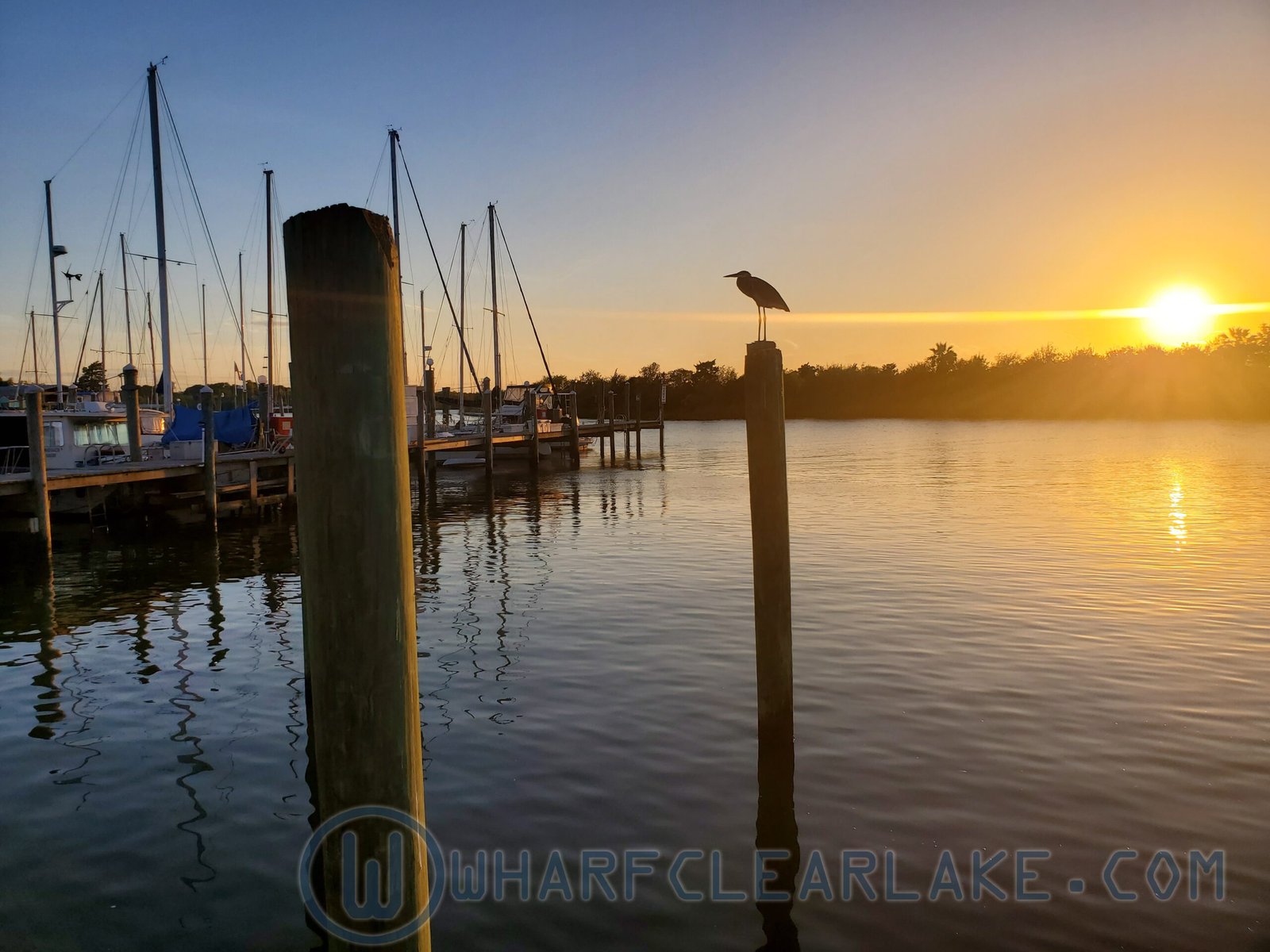
Wharf Marina visual context

Read the source pages
- 2024 Association Legal & Professional Spending
- League City Code & Fire Marshal Records
- The Wharf v. Eric Springstun — Cause 23-07-10483-CV
- Association Notice of Nonsuit
Editorial note: The accounting figures and municipal inspection results are reported as source-record facts. Questions about governance, authorization, benefit, and spending priorities are presented as questions unless a court or agency source has made a specific finding.
From the Marina
Wharf Clear Lake photo archive
