WharfClearLake.com
Due Process: Beautiful in Theory
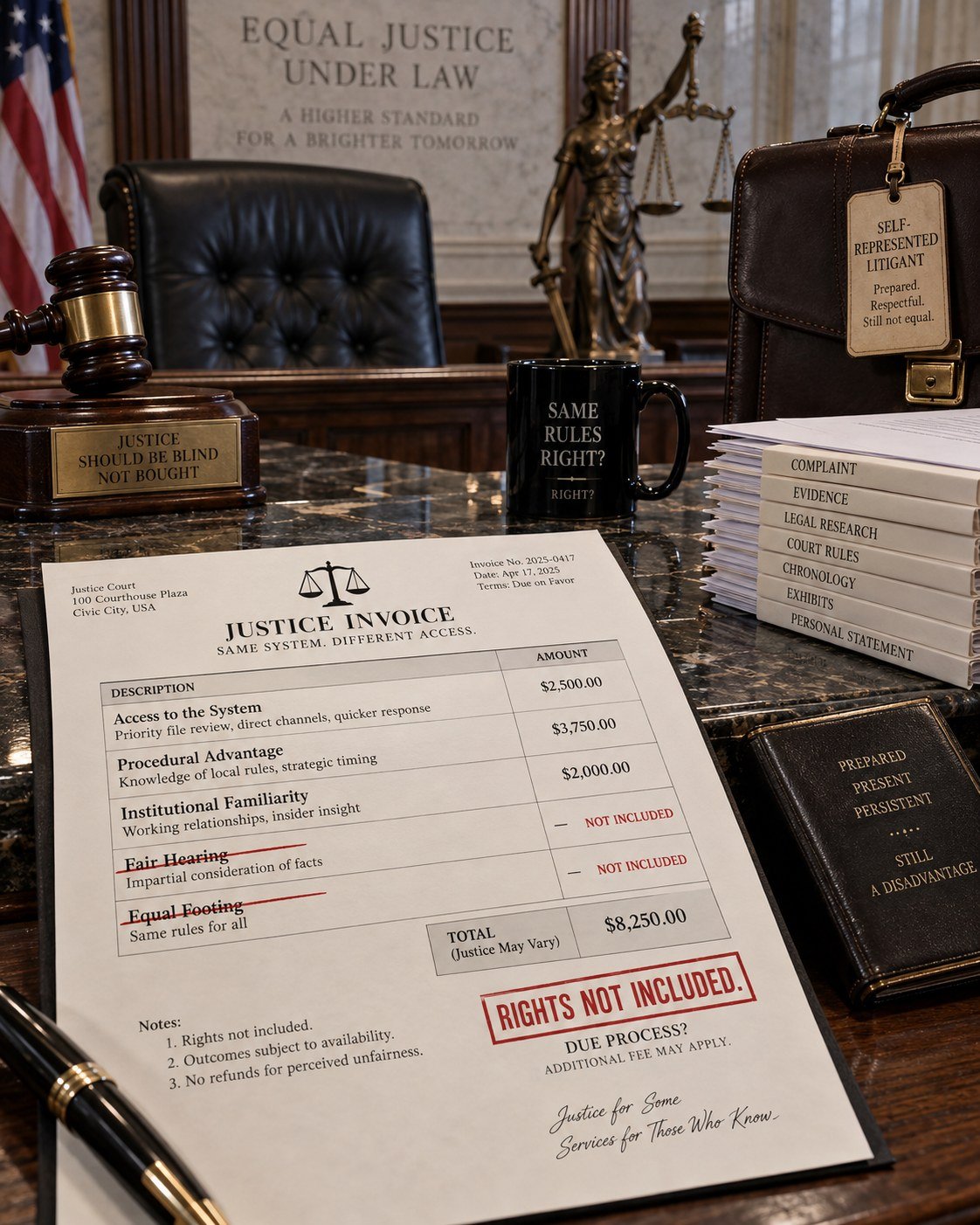
Editorial commentary. This page discusses the practical meaning of due process in light of the public litigation record. It distinguishes opinion about fairness from adjudicated findings of misconduct.
Due process may be one of the most elegant ideas in American law.
Notice. Opportunity to be heard. Neutral decision-maker. Meaningful procedure before government or judicial power affects protected interests.
It is difficult to improve upon as a concept.
Concepts, however, enjoy unusually favorable working conditions.
What due process is supposed to accomplish
Texas constitutional law speaks in terms of due course of law and open courts. Federal constitutional law speaks of due process. Judicial conduct rules speak of impartiality and the right to be heard according to law.
All of those principles point toward a basic expectation: important rights should not disappear merely because the route to enforcing them is procedurally complicated.
Yet procedure can become so dominant that the existence of a right and the ability to obtain meaningful review of that right begin to look like separate subjects.
The procedural paradox
Every serious legal system needs procedure. Courts cannot function if evidence, deadlines, jurisdiction, preservation, records, and briefing rules mean nothing.
But procedure is supposed to organize justice.
It becomes harder to defend when justice begins to look like a side effect that occurs only if every procedural gate opens in the correct order.
A litigant may have evidence but lack the reporter record required to obtain meaningful appellate review of what happened at a hearing.
A litigant may raise a substantive property issue but encounter a jurisdictional ruling before that issue is reached.
A litigant may preserve a complaint but face a security requirement, briefing defect, timing issue, or other procedural barrier before substantive review occurs.
None of those events automatically proves wrongdoing.
Collectively, however, they can produce an uncomfortable question:
How much process can fail before “due process” becomes mostly branding?
Rights on paper
Constitutions are exceptionally good at stating principles.
They are less talented at walking into a courtroom and enforcing themselves.
That work is performed by institutions and human beings.
Which means every constitutional guarantee ultimately depends on procedures, judges, clerks, lawyers, records, deadlines, and appellate mechanisms functioning well enough to make the guarantee real.
Paper has always been remarkably patient. It will promise open courts indefinitely.
The person standing at the courthouse door tends to operate on a shorter schedule.
Meaningful review matters
The distinction between receiving a hearing and receiving meaningful review matters. So does the distinction between a ruling on procedure and a ruling on the underlying merits.
Those distinctions are central to several records collected on WharfClearLake.com.
A docket entry saying “dismissed” may sound conclusive while leaving unanswered whether the court decided the underlying property dispute, whether jurisdiction controlled, whether review was premature, whether the ruling involved an entity rather than an individual, or whether a later appeal remained pending.
The practical test
The most useful way to evaluate due process is not by counting how many constitutional phrases appear in a brief.
It is to ask what actually happened:
- Was notice adequate?
- Was there a meaningful opportunity to present evidence and argument?
- Was the decision-maker impartial under the governing standard?
- Was the record available for meaningful review?
- Were substantive issues actually reached?
- Could an adverse ruling realistically be corrected through appeal?
Those are questions the source record can help answer.
Due process is beautiful in theory. The more important question is whether anyone recognizes it when it shows up for work.
Litigation Timeline · Document Library · Editorial Standards
From the Marina
Wharf Clear Lake photo archive